
Pre-diagnosis
Is he? Isn’t he?
One day, I find him in the sitting room sitting on the floor babbling into the family phone. He has all the expression on his face and volume in his sound of someone speaking long distance to Pakistan. “But Ami!” he says just like me down the landline. I laugh. Good he is role playing. Surely this means he doesn’t have autism?
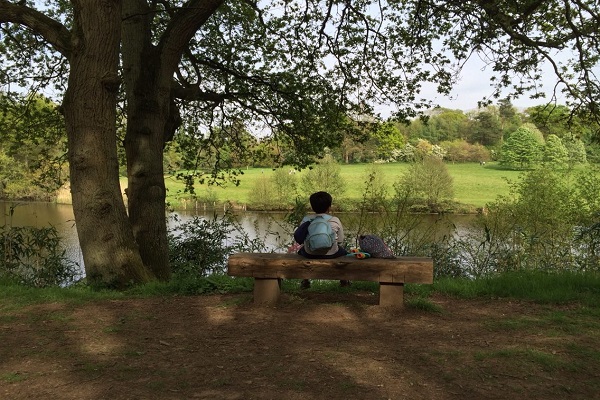
The next day, there is a sunny family picnic. He is sitting there alone under a tree singing to himself. Other kids are playing football. One of them kicks the football towards him and it rolls next to the tree and stops there. The other children yell to him to throw the ball back. He continues singing. One of his cousins runs over and grabs the ball and takes it back to the game. He doesn’t even notice. Surely this means he has autism?
This was the hardest phase for us. This is the phase when we went from proud first timers trying to create and catalogue happy memories to nervous, anxious, parents who looked at everything our son did with fear.
We read books. We read every article on the internet. In the night we would sift through what he had done in the day and try and reassure ourselves that everything was fine. Then in the middle of the night, a time of the day when fears sit heaviest on our hearts, we would scroll down our mobiles trying to find some bit of evidence to show that it was all going to be ok.
Then we stopped. We stopped spending all our energy reaching outwards, trying to find out answers for “why it had happened” and “what it was called” and instead focused on our son and how we could help him.
A parent
Observe record and trust your instincts
Observe your child and continue to maintain a diary with a record of their progress; their behaviour, diet and sensory diets. Recording information will allow you to spot patterns and behaviour triggers. It will also help you identify what works and doesn’t work with your child and help professionals that you may work with in the future.
Remember you are the parent and know your child best. Even though you may access formal support, most of the time you will be your child’s teacher, therapist, doctor, nurse and advocate. When you access formal support you may be given a lot of advice but you know your child best. You should use that knowledge to adapt the advice you get to your child, including the pace at which you give them additional support, the time when therapy is given, who gives it and how its given.
Find out about early intervention
Autism does not have a “cure”. However, research shows that early intervention treatment services can improve a child’s prognosis. While early intervention is extremely important, intervention at any age can also be helpful.
Find out what therapies can help your child with their delayed milestone. Therapies to help your children with any delayed milestone often do no need to wait for a formal diagnosis. See types of therapies.
Support your child with their delayed milestone
While waiting for a formal diagnosis and access to professional services you can continue to support your child in progressing towards their delayed milestone. Some things parents have told us may help when dealing with your child are:
Taking it one step at a time
Breaking up the long-term goal into (sometimes very) small tasks and using rewards when those tasks are achieved.
At two my son didn’t have the motor skills to put a spoon of porridge into his mouth. I would put my hands on his spoon show him how to take it to his mouth and then leave it there so he had to take it out and put the spoon back.
Using their interests
Teaching a child is easier when they are fully engaged. A child is more likely to learn if you are using their hobbies and interests to teach them.
My son loved trains. I used those trains to help him interact with different materials. I would throw his train into sand, foam, water, jelly, mud. To get his train back he needed to touch different materials. I found out that once he had touched the material once he didn’t mind touching it again.
Picking your battles
You and your child can’t focus on everything all at once. Make sure you pace yourself and your child through various therapies.
There are many times you will feel like if you threatened them enough, spent enough time with them, gave them enough rewards, they will do that all the things you want them to do. It is really important to prioritise the areas you want to focus on and know when to pick your battles.
Avoid miracle cures
As parents we can do anything for our children. On bad days, I was desperate, so very desperate to make it better for my son. Parents of children on the spectrum, all have stories of therapies we tried that did not benefit our child. Please do not believe anybody offering you a “miracle cure” especially where large amounts of money are involved.
There will be moments that will seem like miracles on your journey, beautiful happy moments but they will be created by your child and you.
Support for parents