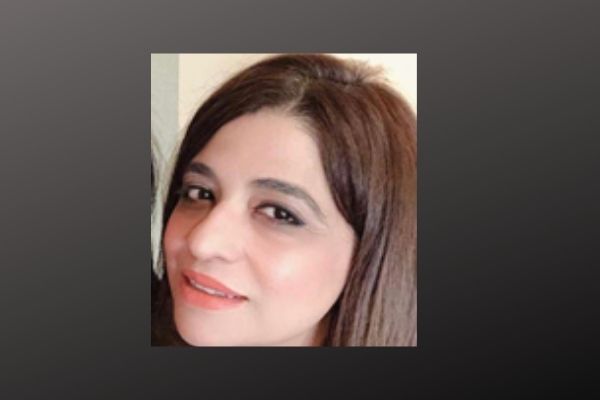
OSW is delighted to be putting a spotlight on Wajiha Javaid, mother to Ayan, 15, who recently starred in Pakistani short firm Bhai. The film is about the relationship between two brothers, one of whom is differently abled and is premiering at Toronto International Film Festival. Here Wajiha speaks to Zainab Kizilbash, founder OSW about the experience.
Wajiha, we are all so proud of Ayan for starring in this film and creating autism awareness in our communities. Tell us how it happened?
To be honest, I wasn’t sure about Ayan’s auditioning for a film. I don’t hide his autism diagnosis but I don’t publicise it widely either and I was apprehensive about the attention. Ayan’s name was suggested to the film producers through my network of contacts with Special Olympics Pakistan and Autism Spectrum Disorder Welfare Trust. I was hesitant but took him for the audition. In answer to their questions, he spoke to the team about his favourite Charlie Chaplin films; the names of heavy metal bands, his ability with the violin and guitar. They were impressed. I got an email offer the very same day.
Although this is a short film, schedules can be very tiring. How did Ayan cope when the film was being recorded?
Ayan is a child who gets exhausted with heat. He doesn’t cope without food for long periods of time nor with loud noises. The recording days were long and although I made sure the schedule allowed for breaks for him, it was still hard work. But Ayan was determined. And patient. Because he had decided he was going to do this film he was completely committed and made sure he gave it his best. Even the neurotypical children at the set got exhausted, and said they were exhausted but he kept going.
Has Ayan always had an interest in films?
Yes. Zainab, my approach with Ayan has always been to understand his strengths and skills and build on them. Even at 2 and a half although she couldn’t speak he was able to play learning games on the computer and knew written language. Now, he has excellent computer skills. He is good at music. And yes he has a strong interest in American culture and old American movie classics and contemporary music.
 One thing that we at OSW feel strongly about is that we should not only provide people with autism support in areas of need but also pay attention to their strengths. Looks like you have done just that with Ayan?
Yes absolutely. This was one of the reasons I – after trying mainstream schools- started to home school him. I felt that he would learn differently to his peers and therefore I needed to go at his pace and development. My strong message to parents would be not to obsess about mainstream schooling or academics but to focus on your child’s functional skills and ability to regulate emotions. That will help your child become more independent in the future.
I think I have learnt as much from Ayan and grown because of him as he has from me. People have judged by approach but I have taken the decisions that are important and right for him.
Making the decisions that are right for your child despite pressure can be hard. When did Ayan get his diagnosis and how did you decide on your approach?
Ayan was diagnosed at 2 and a half. Well, I say he was diagnosed but we didn’t fully understand what that diagnosis meant. You see we were in living in Japan at that time. I had no concerns about Ayan- he was a little hyperactive but nothing that I felt was unusual. He wasn’t speaking but his school put it down to his exposure to three languages: English, Urdu and Japanese. I was a Montessori teacher at that time and saw that some children were able to cope with multiple languages. His school acknowledged our concerns and sent him to a psychologist. I wasn’t able to go to the meeting- my husband went- and when they said the Japanese word for autism, Jiheishō,he didn’t fully understand and told me all was ok. It was later that the school called us in to discuss the diagnosis and that’s when the penny dropped.
Zainab I couldn’t sleep for days. I kept going online looking for answers. I didn’t know anything about autism so at that time I was looking for a “cure”. Of course, one doesn’t exist but I could see that early intervention would make a difference. And that’s where my autism journey with Ayan started. Of course, there was much unsolicited advice. On what we could and should do. But we did our research and made decisions that were best for our child.
How did you and how have you looked after yourself since then?
Ayan is my normal. I have since realised that I need to be surrounded by individuals who accept him and me and our family completely. I avoid going to places where he and I will be judged. I am lucky to have a supportive circle and stay within it.
Looks like Ayan is supported and living his potential. Do you have any worries about the future?
Of course. I know autism is for life and so we will have different experiences at different stages. He is currently an adolescent and that comes with its own challenges and opportunities!
We feel there isn’t a lot of advice and support for people with older autistic individuals who have received early intervention. What practical opportunities do you think we need to provide to autistic individuals?
Yes there is very little support for autistic teenagers and young adults especially those who have received early intervention. Our support resources are very outdated. I think we need ways to provide practical opportunities for autistic individuals so they can productively contribute to society. For example I would like to create an organisation where individuals with autism can freelance and provide digital/technical/creative content for businesses. The freelancing element could accommodate different needs while the organisation would benefit from committed employees. Win-win.
And how do you think we can create more awareness in the general population?
There is very little awareness in the general population. We need to find ways through arts and media to create this awareness. Ayan’s appearance in this film is a start but we need to do more so autism can be seen and understood by the general public.
How do you think we can support each other within the special needs community?
The special needs community is very diverse as is the autism community in itself. We need to be more inclusive and accommodate different types of autism families. It is only by focussing on our common goal and objective- to create space for autism in our communities- that we can move forward.
Wajiha Javaid is mom to 15 year old Ayan and two daughters. She has a Masters in Women Studies and is a former Montessori teacher who taught in Waseda Frontier Kids Tokyo. Ayan runs his own Youtube channel is a budding musician and an animation artist. Bhai will be released on online free on World Mental Health Day on October 10th, 2021 on www.citylightsmediapro.com